NPS Survey Template
Free NPS survey template for measuring customer loyalty and understanding what makes customers recommend.
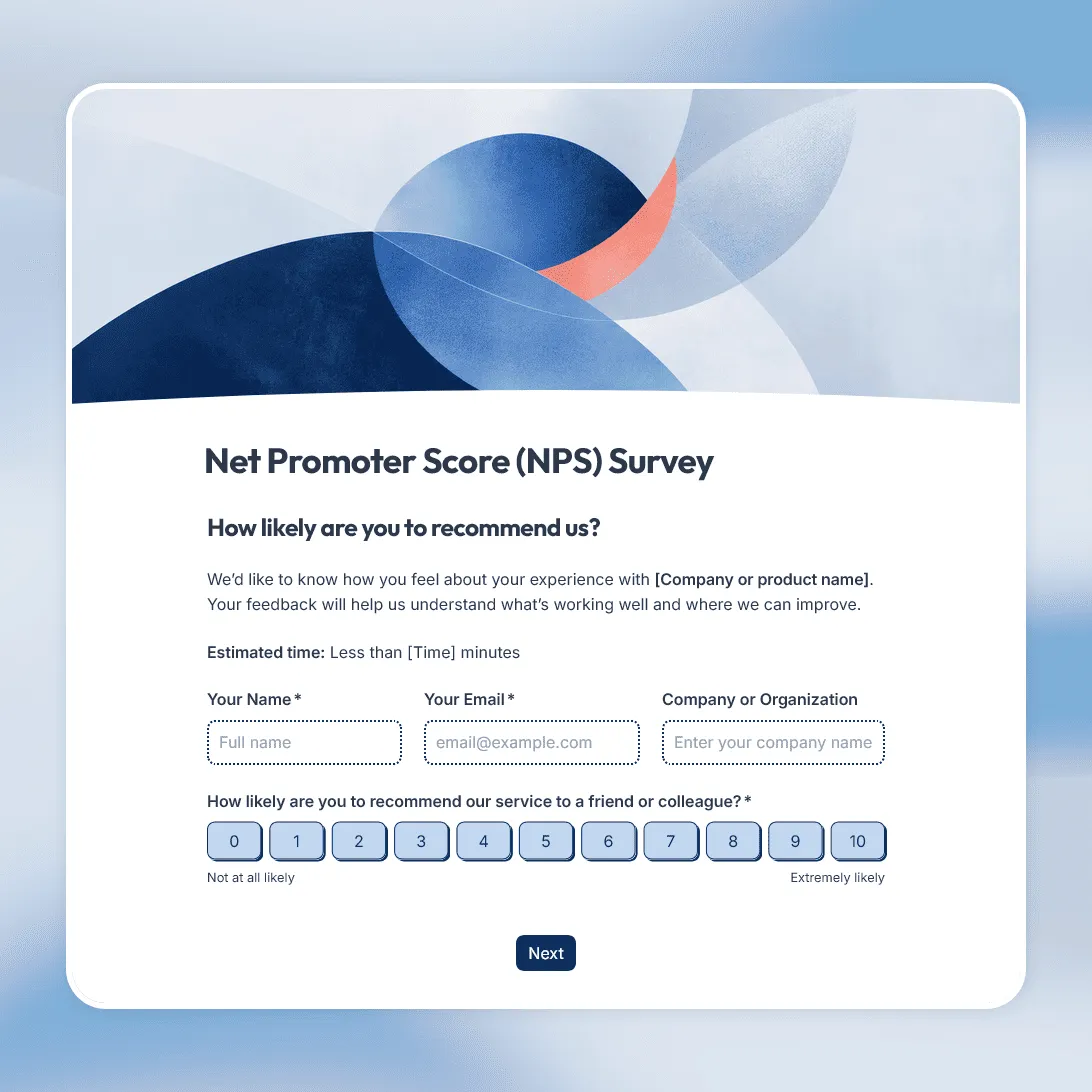
Need a custom NPS survey?
Describe what you want to measure and FormGrid will create a tailored NPS survey template for you.
About this NPS survey template
This free NPS survey template helps you measure how likely customers are to recommend your business, product, or service.
NPS stands for Net Promoter Score. It is built around one simple question: how likely someone is to recommend you to a friend, colleague, or peer. The score gives you a quick loyalty signal, while the follow-up questions help you understand what is driving that score.
You can use this template for SaaS products, ecommerce stores, agencies, service businesses, memberships, communities, customer success teams, and B2B account check-ins. It works well when customers have enough experience with your business to judge the relationship as a whole.
What this template includes
This NPS survey template includes questions for:
- Customer name and email
- Company or organization
- The standard 0-10 NPS rating question
- Follow-up feedback based on the score
- What the customer likes most
- What could be improved
- Whether the customer would like follow-up
- Permission to contact the customer
- Optional testimonial or review permission
You can keep the survey short or add more context, depending on how you plan to use the results.
For example, you might ask detractors what disappointed them, passives what would make the experience better, and promoters what they value most. With conditional logic, each customer can see the follow-up question that matches their score.
How to use this NPS survey template
Click Use this template to open the survey in FormGrid. You can edit the questions, wording, layout, colors, and confirmation page before sharing it with customers.
Start with the basics:
-
Choose who should receive the survey. NPS works best when customers have enough experience to judge the relationship. Good moments include after onboarding, after a few weeks of product use, before renewal, after a project, or during a regular customer check-in.
-
Adjust the main NPS question. The standard version is “How likely are you to recommend us to a friend or colleague?” For B2B customers, “colleague” may feel more natural. For consumer surveys, “friend” may be enough.
-
Keep the survey short. A strong NPS survey usually includes the rating question, one open-ended follow-up, and an optional follow-up permission question. Extra questions can make the survey harder to finish.
-
Use different follow-ups for each score range. Promoters, passives, and detractors need different questions:
- Promoters: What do you value most?
- Passives: What would make the experience better?
- Detractors: What disappointed you?
-
Publish and share the survey. After you publish your form, share it by link, email, or embed it on your site. You can also embed the survey on a customer portal, account page, help center, or post-purchase page.
When responses come in, group customers by score:
- Promoters score 9 or 10
- Passives score 7 or 8
- Detractors score 0 to 6
Use the comments to understand what is driving each score range. Promoters can show what customers value most. Passives can show what is missing. Detractors can show where trust, value, product fit, or support may be breaking down.
For reporting, export responses and compare results by customer type, plan, product, account owner, region, or time period.
NPS survey FAQs
What is an NPS survey?
An NPS survey measures how likely customers are to recommend your business, product, or service. Customers answer on a 0-10 scale, then usually explain the reason for their score in a follow-up question.
What question should an NPS survey ask?
The standard NPS question is: “How likely are you to recommend us to a friend or colleague?” You can adjust the wording to fit your audience, but the 0-10 rating scale should stay consistent if you want to track the score over time.
How do you calculate NPS?
To calculate NPS, subtract the percentage of detractors from the percentage of promoters. Promoters are customers who score 9 or 10. Passives score 7 or 8. Detractors score 0 to 6.
For example, if 60% of respondents are promoters and 20% are detractors, your NPS is 40.
When should you send an NPS survey?
Send an NPS survey when customers have enough experience to judge the relationship. Good moments include after onboarding, after a few weeks or months of use, before renewal, after an account review, or at a regular quarterly or twice-yearly check-in.
How often should you send an NPS survey?
For relationship feedback, quarterly or twice a year is usually enough. Sending NPS surveys too often can create survey fatigue, especially when nothing meaningful has changed since the last survey.
Should an NPS survey be anonymous?
It depends on how you plan to use the feedback. Anonymous NPS surveys may get more honest criticism. Identified surveys are better when your team wants to follow up, recover unhappy customers, or connect feedback to account data.
A good middle ground is to keep contact details optional and ask whether the customer is open to follow-up.
What should you ask after the NPS rating?
Ask one open-ended question that explains the score. For example: “What is the main reason for your rating?” You can also use conditional logic to ask different follow-up questions for promoters, passives, and detractors.
What is a good NPS score?
A good NPS score depends on your industry, audience, timing, and customer expectations. Your own trend is usually more useful than a generic benchmark. A score that improves over time shows progress. A sudden drop means you should review recent product, service, pricing, or support changes.
How do I follow up with NPS detractors?
In FormGrid, you can send an NPS detractor follow-up email automatically with a send email block. Set the email to send when someone gives a score from 0 to 6, then use the message to acknowledge the feedback and ask what went wrong.
You can also use conditional logic to send different emails based on the score range: one for promoters, one for passives, and one for detractors. If you ask whether the customer is open to follow-up, you can only collect contact details from people who say yes.
An NPS detractor follow-up email could say:
Subject: Thanks for your feedback
Hi [Name],
Thanks for taking the time to share your feedback. I saw your rating and wanted to better understand what led to it.
What is the main thing we could have done better?
I’d be happy to take a closer look if there’s anything we can still fix.
Best,
[Your name]
Keep the email short and personal. The goal is to show that someone read the feedback, understand the problem, and make it easy for the customer to reply.
What is the difference between NPS and CSAT?
NPS measures customer loyalty and likelihood to recommend. CSAT measures satisfaction with a specific experience, such as a support ticket, purchase, delivery, or appointment.
Use an NPS survey when you want to understand the customer relationship. Use a customer satisfaction survey template when you want feedback on a specific experience.
Can I use this NPS survey template for free?
Yes. You can use this free NPS survey template in FormGrid, customize it, and collect unlimited responses for free.
Related templates
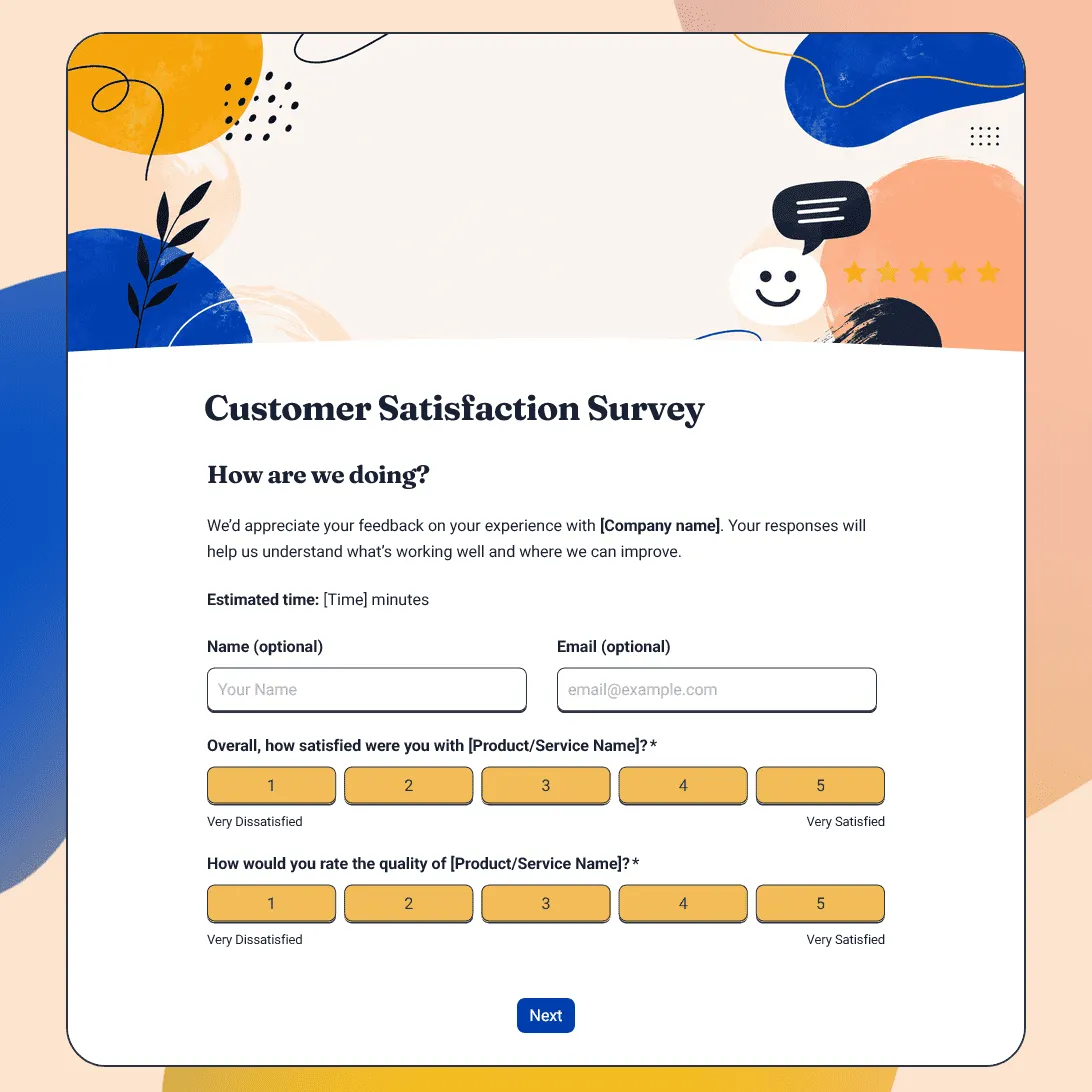
Customer Satisfaction Survey Template
Free customer satisfaction survey template for measuring customer experience, product quality, support, delivery, value, and likelihood to return.
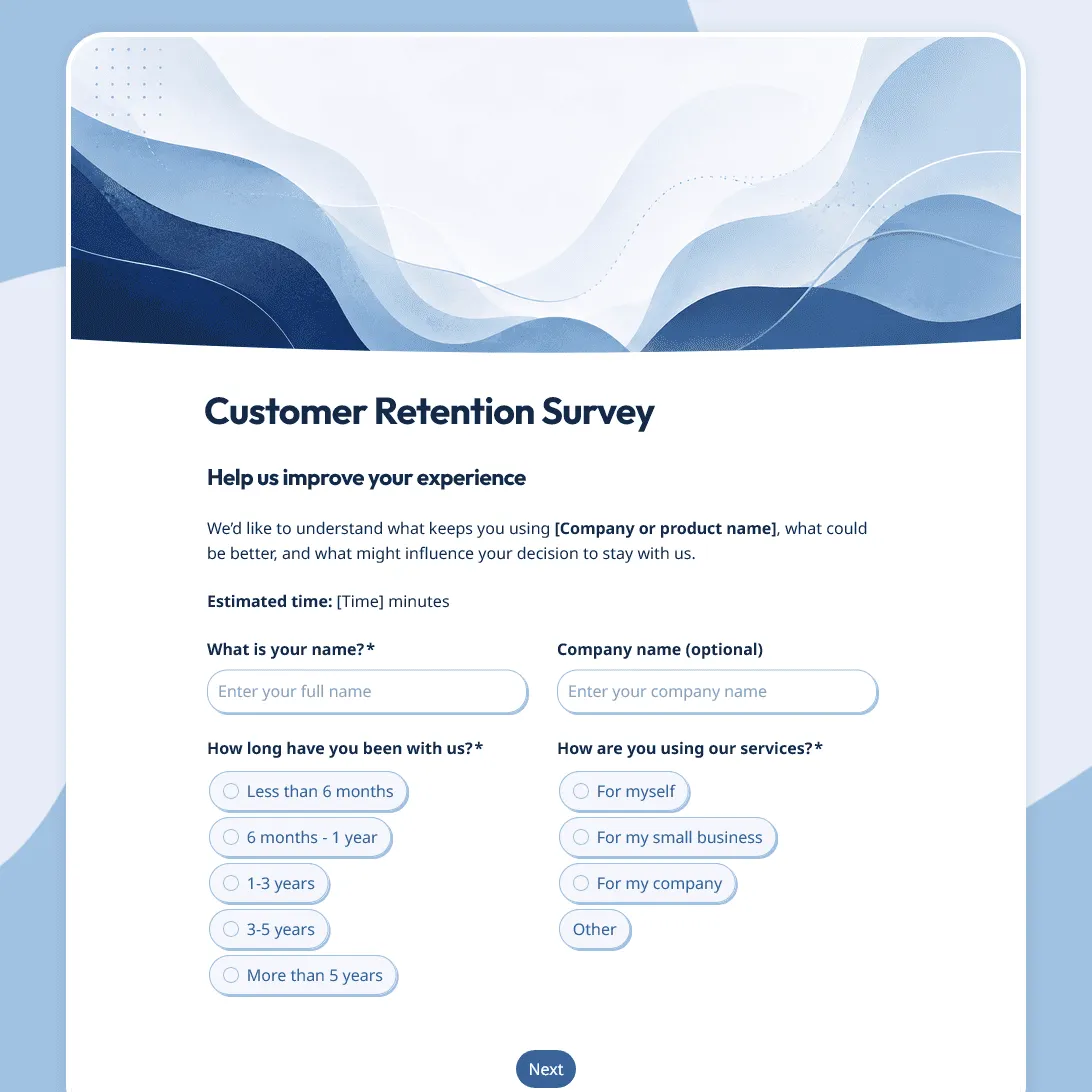
Customer Retention Survey Template
Free customer retention survey template for understanding why customers stay and what puts them at risk.
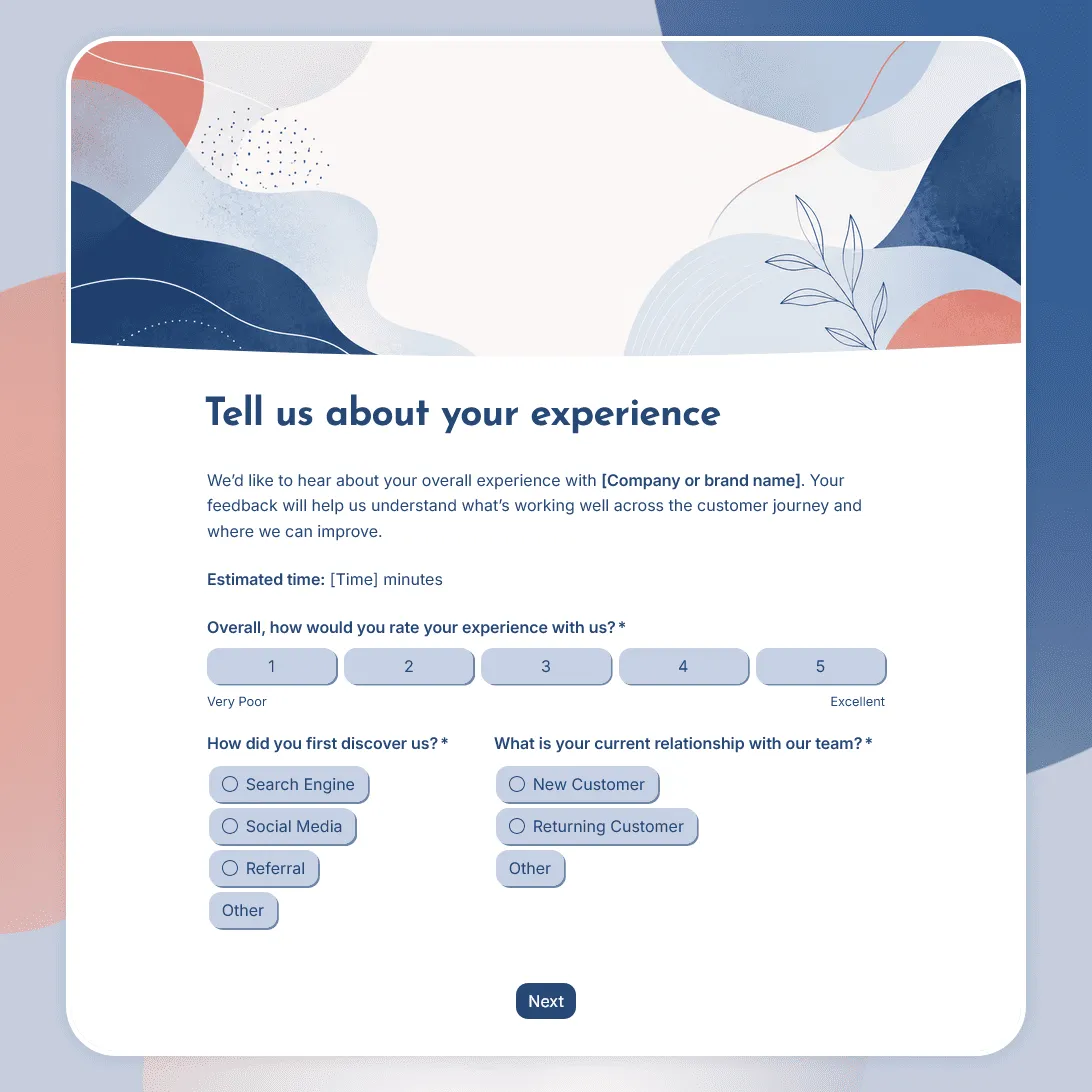
Customer Experience Survey Template
Free customer experience survey template for understanding the customer journey, including first impressions, onboarding, support, value, friction, and loyalty.