Staff Satisfaction Survey Template
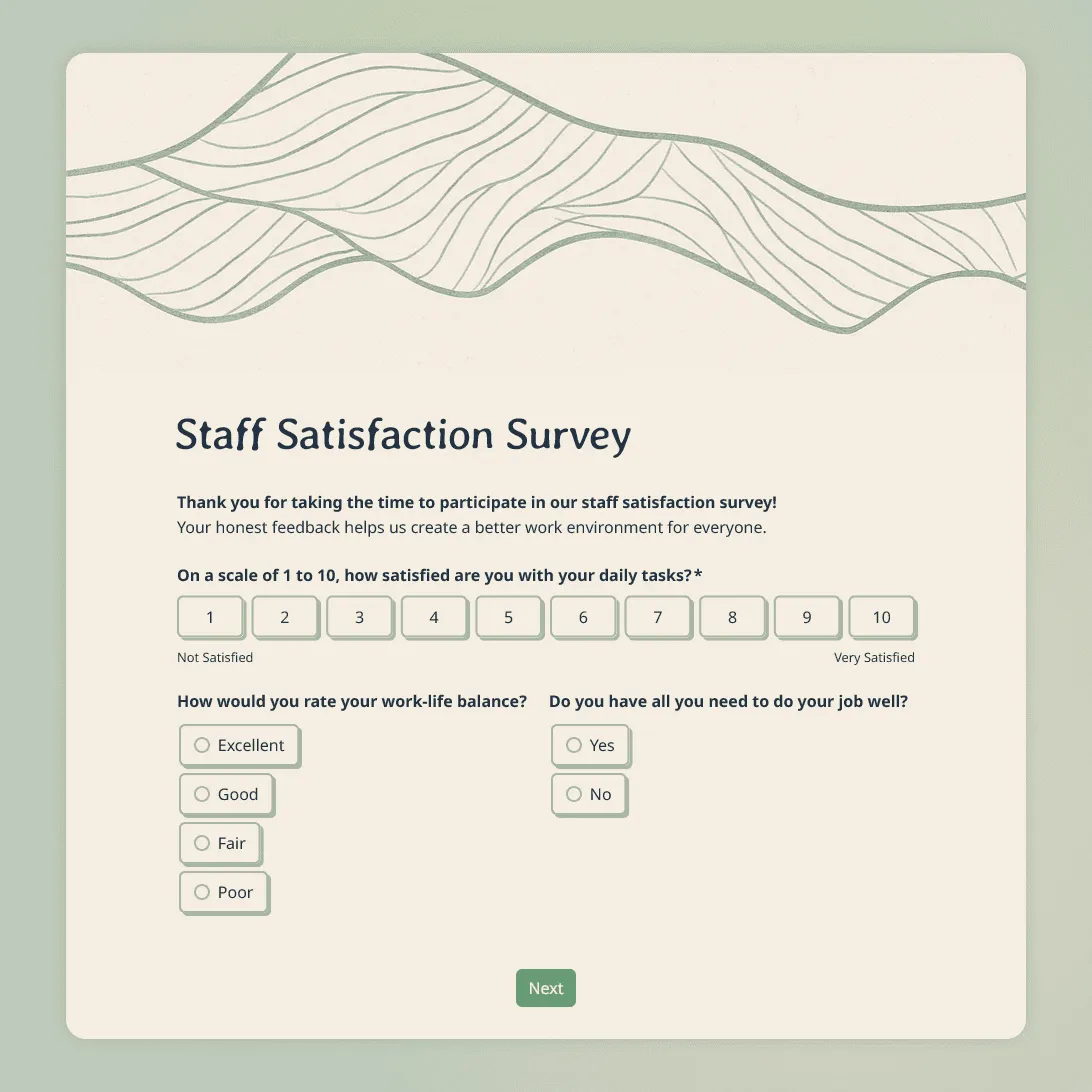
Free staff satisfaction survey template for measuring employee morale, workload, manager support, recognition, workplace culture, and intent to stay.
Need a custom staff satisfaction survey?
Tell us about your team and FormGrid will create a tailored staff satisfaction survey for you.
About this staff satisfaction survey template
This staff satisfaction survey template gives employees a private way to share how they feel about their work, their manager, their team, and the company as a whole.
It is built for employee satisfaction surveys, staff morale checks, workplace satisfaction surveys, and internal HR check-ins. You can use it once or twice a year for a broader review, or shorten it for a quarterly staff pulse.
The template focuses on the areas that usually explain satisfaction at work: role clarity, workload, work-life balance, manager support, communication, recognition, compensation, growth, culture, trust in leadership, stress, and whether employees see themselves staying.
For a shorter recurring check-in, see the employee pulse survey template. For broader workplace comments, see the employee feedback survey template.
Inside this staff satisfaction survey
This template is designed as an anonymous staff survey. Employees can answer rating questions, then explain the scores in their own words.
It covers:
- role clarity and day-to-day responsibilities
- workload and work-life balance
- tools, resources, and support
- manager communication
- recognition and fairness
- team communication
- compensation and benefits
- career growth
- workplace culture
- leadership trust
- job security
- stress and morale
- intent to stay
- likelihood to recommend the workplace
- open suggestions for HR or leadership
The rating questions help you compare results across survey cycles. The open comments help explain why a score is high or low.
Staff satisfaction survey questions
The template includes a mix of scaled questions and written feedback prompts.
Day-to-day work
- How clear are your current responsibilities?
- How manageable is your workload?
- Do you have the tools and resources you need to do your job well?
- How would you rate your current work-life balance?
- What would make your day-to-day work easier?
Manager support
- How supported do you feel by your manager?
- Does your manager communicate expectations clearly?
- Do you receive useful feedback on your work?
- Do you feel comfortable raising concerns with your manager?
- What could your manager or team lead do better?
Recognition and communication
- Do you feel recognized for your contributions?
- Do you feel treated fairly at work?
- How would you rate communication within your team?
- How informed do you feel about decisions that affect your work?
- What kind of recognition would feel meaningful to you?
Growth, pay, and future plans
- Do you see opportunities to grow here?
- How satisfied are you with your compensation and benefits?
- How secure do you feel in your role?
- How confident are you in the company’s direction?
- How likely are you to still be working here in 12 months?
Open feedback
- What is working well for you right now?
- What is the biggest source of frustration in your work?
- What is one change that would improve your experience here?
- Is there anything else you want HR or leadership to know?
Anonymous staff satisfaction surveys
Staff satisfaction feedback can be sensitive, especially when the survey asks about managers, workload, pay, stress, job security, or leadership.
This template is designed for anonymous feedback. Before you send it, review the intro text so employees understand how responses will be handled.
A simple note can work well:
This survey is anonymous. We are collecting feedback to understand broader patterns across the team. Individual responses will not be shared with managers.
Be careful with optional segmentation. Department, location, tenure, work model, or role level can help you understand patterns, but small groups may still feel identifiable. For a team of three, “anonymous by department” will not feel anonymous to the people answering.
Adapt the survey to your company
This template already includes an anonymous intro, staff satisfaction ratings, open comment fields, and a thank-you page. Before sending it to employees, tailor those details to your company and the reason you are running the survey.
-
Survey goal: Decide what you want to learn from this round. A company-wide morale check may need the full survey, while a post-change check-in may focus on workload, communication, leadership trust, or stress.
-
Company language: Replace generic wording with terms employees recognize, such as team, department, location, manager, leadership, HR, school, clinic, store, or office.
-
Employee groups: Review any questions about department, tenure, location, work model, or role level. Keep only the ones that help you understand patterns without making people feel identifiable.
-
Sensitive topics: Check questions about pay, job security, stress, manager support, and leadership trust. The wording should feel neutral, especially when employees are being asked to answer honestly.
-
Open comments: Adjust the written prompts around the feedback you actually want. For example, ask what would improve day-to-day work, what leadership should pay attention to, or what would make employees more likely to stay.
-
Results follow-up: Update the thank-you page with a clear next step. Tell employees when they can expect to hear about the results, themes, or actions your team plans to take.
After you publish the survey, share the link by email, Slack, Teams, intranet, HR portal, or internal newsletter.
Review the results after the survey
Review the results without breaking trust
When responses come in, compare the ratings across the main topics in the survey: workload, manager support, recognition, compensation, growth, communication, leadership trust, stress, and intent to stay.
Then read the comments for the areas with the lowest scores. The comments are where you will usually find the reason behind the number, such as unclear priorities, too much work, weak manager feedback, limited growth, low trust, or concerns about pay.
Be careful when reviewing small teams. A comment from a two-person department may be easy to identify, even when the survey is anonymous. Group small teams together or review sensitive feedback at a higher level.
After the review, share a short summary with employees:
- what scored well
- what needs attention
- what you are going to look into first
- what will change now
- when employees will hear another update
You can export responses to CSV or Excel for HR reports, leadership reviews, manager discussions, retention planning, or year-over-year comparison.
Related guides and resources
- Employee feedback survey template
- Employee pulse survey template
- Training feedback form template
- How to create a feedback form
- Employee engagement survey guide
Staff satisfaction survey FAQs
What is a staff satisfaction survey?
A staff satisfaction survey is a questionnaire used to understand how employees feel about their work experience. It usually covers workload, manager support, communication, recognition, compensation, growth, culture, stress, and intent to stay.
What should a staff satisfaction survey include?
A staff satisfaction survey should include questions about role clarity, workload, tools and resources, work-life balance, manager support, communication, recognition, fairness, compensation and benefits, career growth, leadership trust, job security, stress, and retention risk.
Should a staff satisfaction survey be anonymous?
For most teams, yes. Anonymous staff satisfaction surveys usually get more honest answers, especially for questions about managers, workload, pay, stress, leadership, and workplace culture. Explain how anonymity works before employees start the survey.
How often should I run a staff satisfaction survey?
A full staff satisfaction survey is usually sent once or twice a year. For shorter check-ins between larger surveys, use an employee pulse survey to track a few current signals, such as workload, stress, morale, or manager support.
What is a good staff satisfaction score?
There is no universal score that works for every organization. Track your own trend over time and compare scores across topics. A lower score for workload, manager support, recognition, growth, or intent to stay is more useful when the comments explain what is driving it.
How do I improve staff survey participation?
Tell employees why the survey matters, how long it will take, whether it is anonymous, and what will happen with the results. Participation improves when employees believe their answers will be read and acted on.
What should I do after a staff satisfaction survey?
Share the main themes, acknowledge difficult feedback, and choose a small number of realistic follow-up actions. Then update employees later so they know what changed because of the survey.
What is the difference between a staff satisfaction survey and an employee pulse survey?
A staff satisfaction survey is broader and looks at many parts of the employee experience. An employee pulse survey is shorter and sent more often to track a few signals, such as morale, workload, stress, or confidence in leadership.
Is this staff satisfaction survey template free?
Yes. This staff satisfaction survey template is free, and you can collect unlimited responses on the free plan.
Related templates
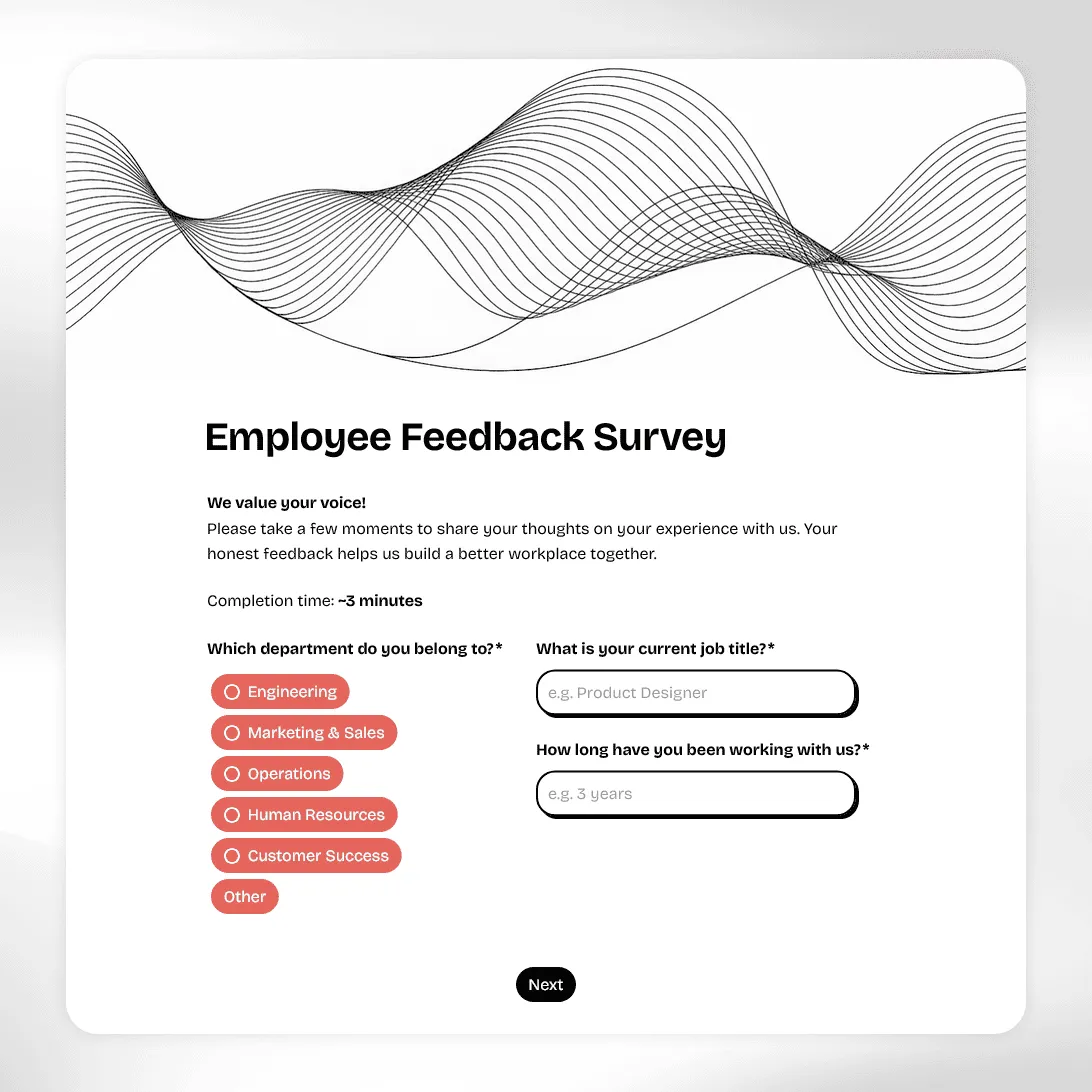
Employee Feedback Survey Template
Free employee feedback survey template for measuring engagement, culture, and team morale. Collect anonymous insights and act on what actually matters.
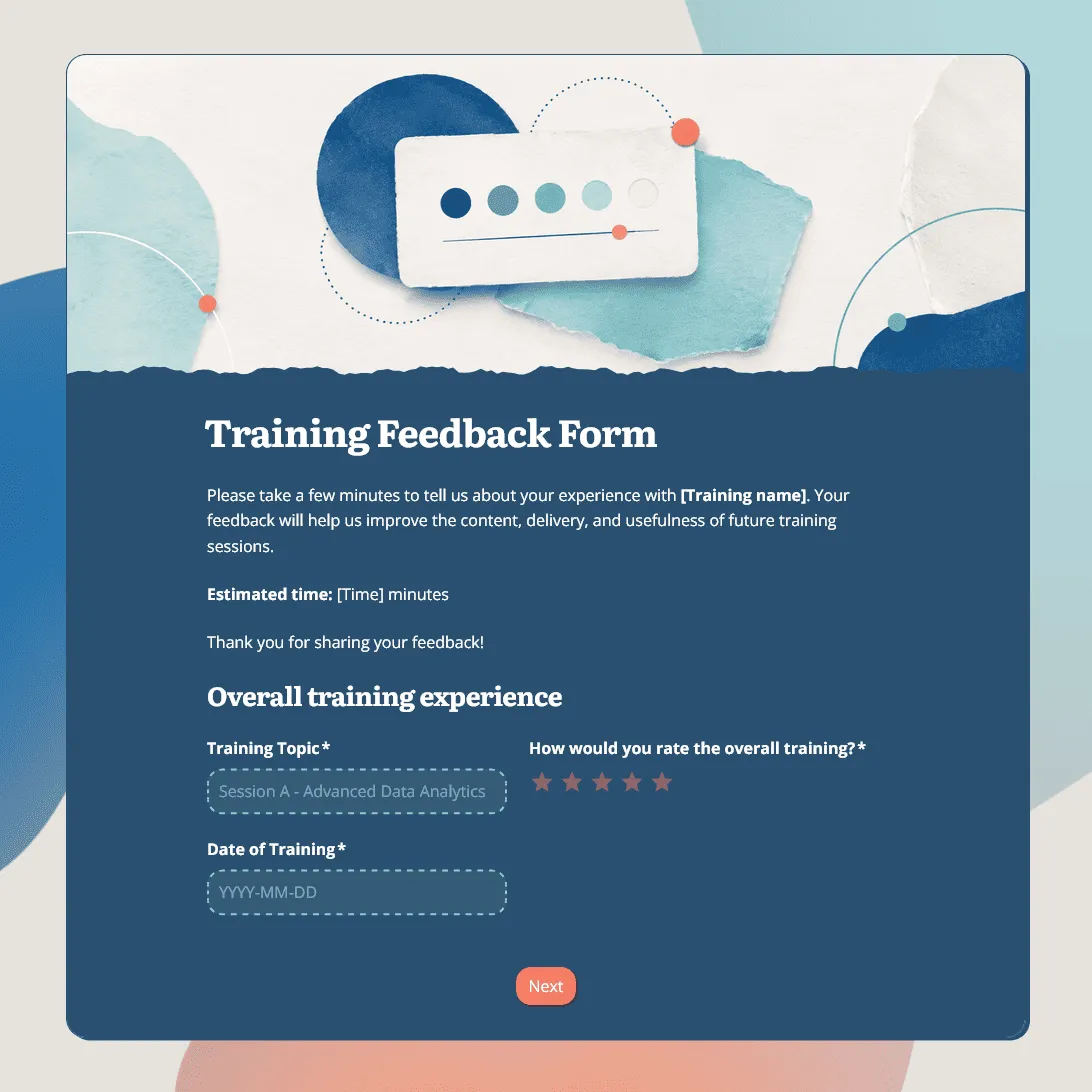
Training Feedback Form Template
Free training feedback form template for post-training evaluation, employee training feedback, trainer reviews, and learning follow-up.
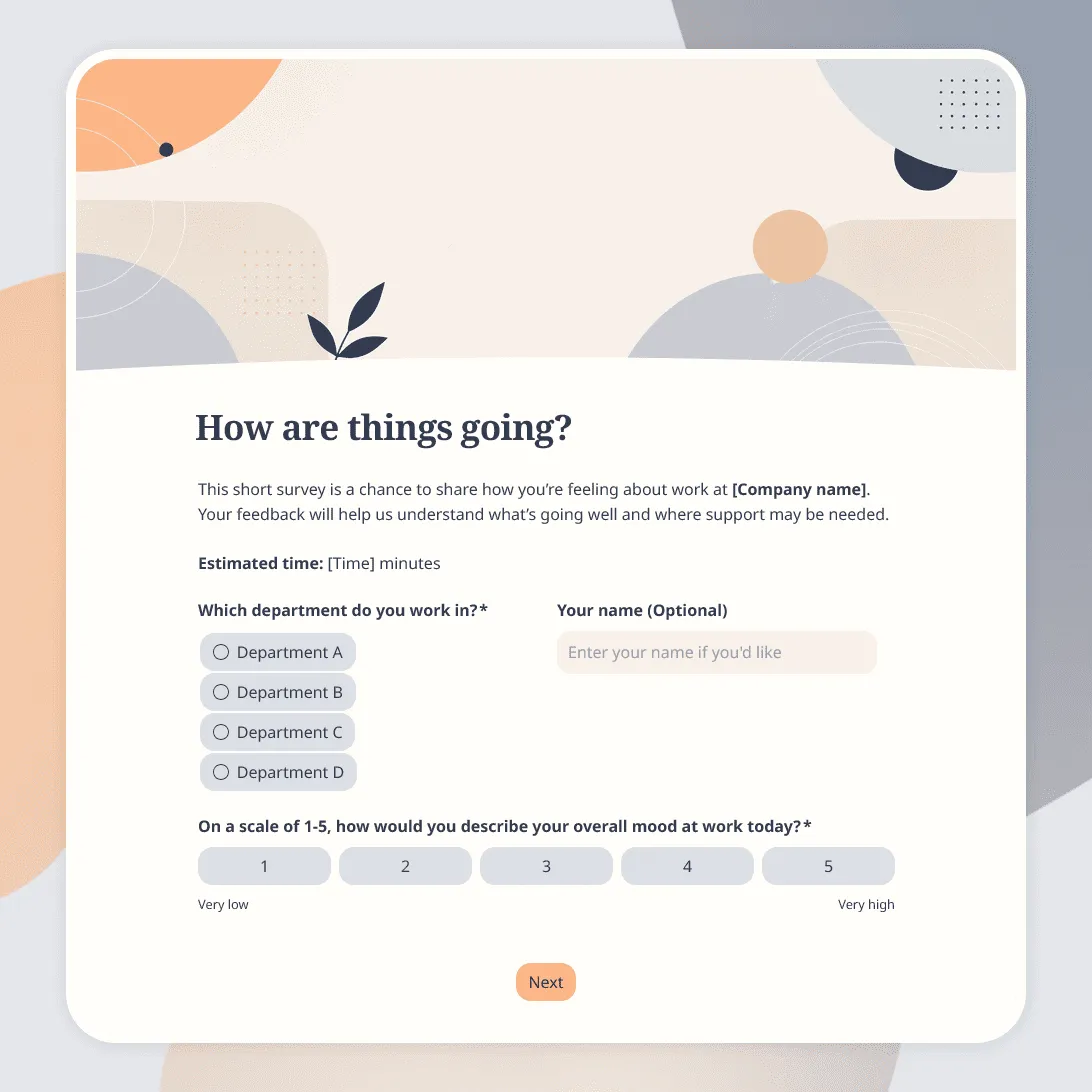
Employee Pulse Survey Template
Free employee pulse survey template for quick team check-ins on workload, morale, communication, manager support, and more.